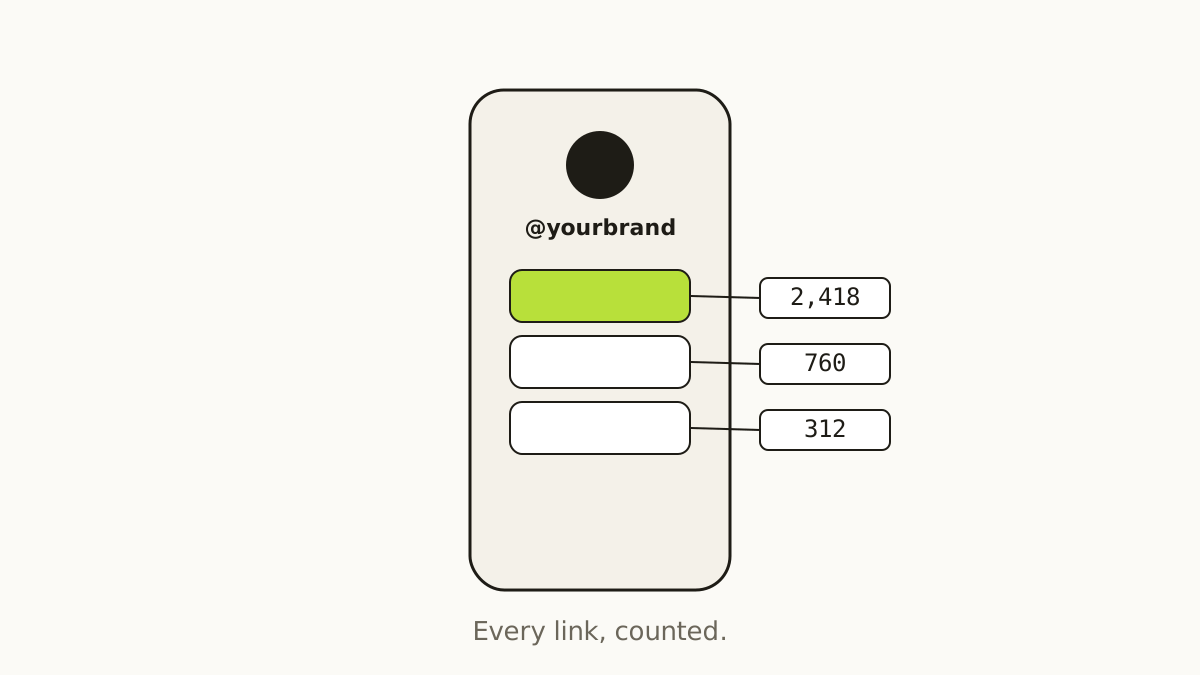
The “link in bio” is the most valuable piece of real estate a creator or small brand owns, and most people treat it like a coat rack — a pile of links with no idea which one anyone actually uses. A bio page can be a coat rack, or it can be a measurable channel. The difference is entirely in whether you can see what happens after the tap.
Why the default bio link tells you nothing
The typical setup is a single link to a page of links. Someone taps through, the page loads, they pick a link — and you learn nothing. You don’t know which link got the tap, you don’t know if the person who bought came from your bio or from search, and you certainly can’t tell whether the newsletter link or the shop link is worth the top slot. You’re optimizing blind.
A measurable bio page fixes this by doing two things the default never does: it counts a click on each block, and it tags the outbound link so the visit carries its origin all the way into your analytics.
What “measurable” actually requires
Three things have to be true for a bio page to earn the word:
- Per-link click counts. Not page views — clicks on each individual link, so you can see that the shop link out-pulls the podcast link three to one and reorder accordingly.
- Tagged outbound links. Every link off the page should carry a
utm_source=biolink(or similar) so that when someone buys, your store attributes the sale back to the bio — not to “direct.” If you’re new to tagging, our UTM guide walks through it. - Your own domain, or at least your own analytics. A page you don’t control is a page whose data you don’t own. When the tool shuts down or changes its export policy, your history goes with it.
Design for the tap, not for the gallery
A bio page is viewed almost entirely on a phone, one-handed, in a few seconds. That shapes every design choice:
- Lead with the one link that matters this week. A launch, a sale, a new episode. Put it first and make it look different from the rest.
- Keep the list short. Five focused links beat fifteen. Every extra link dilutes the taps on the ones you care about.
- Label by outcome, not by platform. “Get the spring collection” beats “Website.” Tell people what they get.
- Add one capture mechanism. An email signup on the page turns a passing visitor into an audience you own, independent of any algorithm.
From mockup to measured
Before you build anything, it helps to see the layout. Our free bio-link preview tool lets you type a handle and a few links and see the page take shape in a phone frame — a quick sketch to get the hierarchy right.
But a sketch isn’t a channel. The real version needs hosting, per-link analytics, tagged outbound links, and ideally your own domain. That’s the gap between a link-in-bio tool and a link-in-bio that’s part of your marketing stack. If you’ve been weighing the options, our comparison with Linktree lays out exactly where a dedicated bio tool stops and a full link platform begins.
The measurable bio page pays for itself
Once you can see which links get tapped and which taps turn into outcomes, the bio page stops being decoration and starts being a decision-making surface. You promote the link that converts, demote the one that doesn’t, and test a new top slot every week with actual numbers behind the call. That’s the whole promise of Shortifi bio pages: the page and the measurement in one place, so your most valuable link finally tells you what it’s doing.