Two numbers, one budget
Every media buyer knows their CPC. It’s right there in the platform dashboard: Google says €0.62, Meta says €0.38, LinkedIn says €4.10. These numbers feel solid. They’re what you use to compare channels, justify budgets, and report performance.
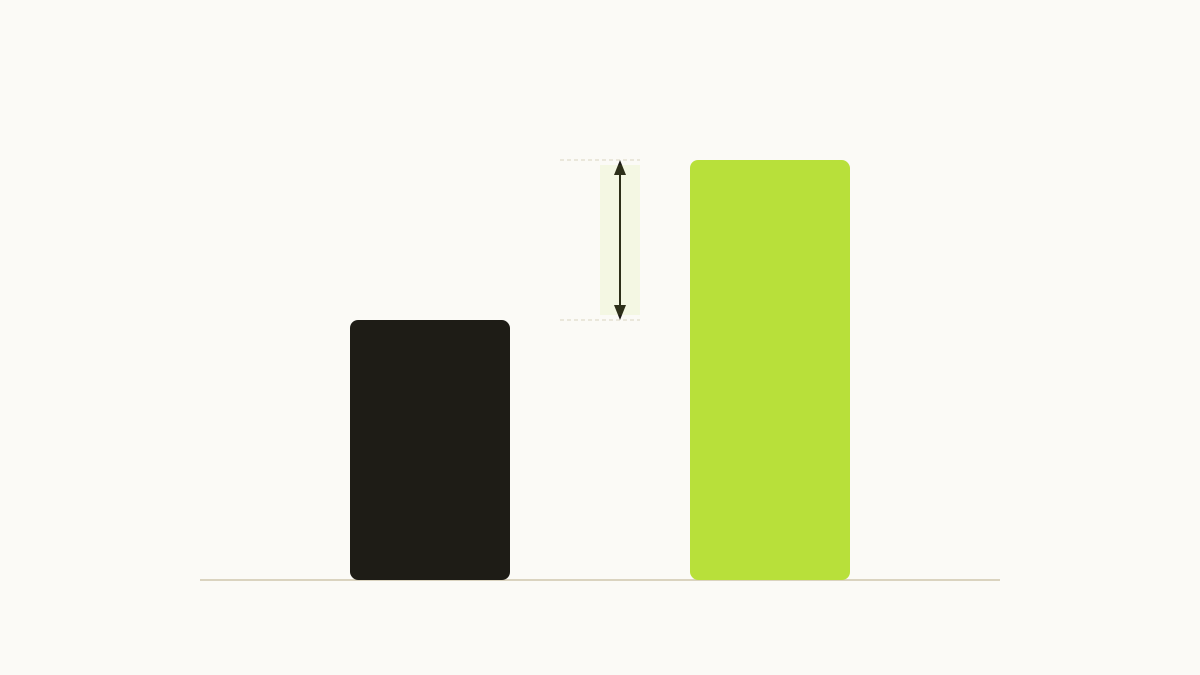
But there’s a second number that matters more, and almost nobody calculates it: cost per attributed click — the cost of a click that actually shows up, correctly tagged, in your analytics or attribution tool.
The gap between these two numbers is a measure of how much of your marketing investment is flying blind.
Why clicks go unattributed
Attribution loss isn’t one problem. It’s five problems at once.
1. Dark traffic and direct (none)
A significant fraction of clicks arrive in your analytics tagged as direct / (none) even when they came from a specific campaign. This happens when:
- Users copy-paste a link from a messaging app (WhatsApp, Telegram, iMessage) instead of clicking it directly
- Email clients pre-fetch links to check for spam, stripping referrer headers
- Browser extensions or privacy tools strip UTM parameters from URLs
- Secure HTTPS pages link to non-HTTPS destinations, dropping the referrer
The widely cited estimate is that 20–60% of actual campaign traffic shows up as direct, depending on channel mix and audience tech behavior.
2. UTM parameter breakage
UTM parameters get stripped or corrupted when:
- Landing pages redirect (301 or 302) and the destination doesn’t preserve query strings
- CMS or page builder systems strip unknown query parameters for “cleanliness”
- UTM values were typed inconsistently and don’t match what your analytics tool expects
- A/B testing tools redirect away from the UTM-bearing URL
Every redirect hop is a chance for your UTMs to disappear.
3. Cross-device and cross-browser gaps
A user clicks your ad on mobile, doesn’t convert, then comes back on desktop a day later through a direct type-in. The attribution model sees the second session as direct. The paid click that initiated the journey gets no credit.
4. ITP, ETP, and browser privacy changes
Apple’s Intelligent Tracking Prevention and Firefox’s Enhanced Tracking Protection reduce the window in which attribution cookies can fire and match. For Safari users, your attribution window may be as short as 24 hours.
5. Ad blockers
Users running ad blockers often also block analytics tracking scripts. A click from this segment registers as a visit in server logs but may appear nowhere in your analytics tool.
Calculating the attribution gap
Here’s a practical method to estimate your attribution gap:
- Pull total sessions from your analytics tool for a given period and channel.
- Pull total clicks from the ad platform for the same period and channel.
- The ratio (analytics sessions / platform clicks) is your attribution rate. If the platform says 10,000 clicks but analytics shows 6,000 sessions from that channel, your attribution rate is 60%.
- Divide your media spend by attributed clicks (not total clicks) to get your true cost per attributed click.
For a channel spending €5,000/month reporting 10,000 clicks at €0.50 CPC, if your attribution rate is 60%, your real cost per attributed click is €0.83 — 66% higher than the dashboard shows.
The channel comparison problem
If attribution rates differ by channel (and they do — email typically has lower UTM survival rates than paid search), then comparing CPC across channels produces systematically misleading results.
A channel that looks more expensive on raw CPC might have a much higher attribution rate — meaning its cost per attributed click is actually lower than the “cheaper” channel.
What to do about it
Use clean, persistent short links
Every link that enters the wild should be a properly tagged short link. Not a long URL with UTMs appended manually. One clean redirect that preserves all UTM parameters.
Test your redirect chain before launch
For any significant campaign, manually trace the full redirect path. Open the link, check the URL bar on the landing page, verify UTMs survived.
Measure attribution rate per channel, not just CPC
Add attribution rate to your channel scorecard. Over time you’ll see which channels have consistent UTM survival and which are systematically leaky.
Implement server-side event collection for critical conversions
For the highest-value conversion events, server-side collection via the Conversions API (Meta) or Enhanced Conversions (Google) can recover 15–30% of conversions that client-side tracking misses.
The real benchmark
A well-run marketing team tracks both numbers: raw CPC (for platform benchmarking) and cost per attributed click (for budget decisions). The gap between them is their attribution health score.
The teams that win at channel optimization are the ones optimizing on the right number.